
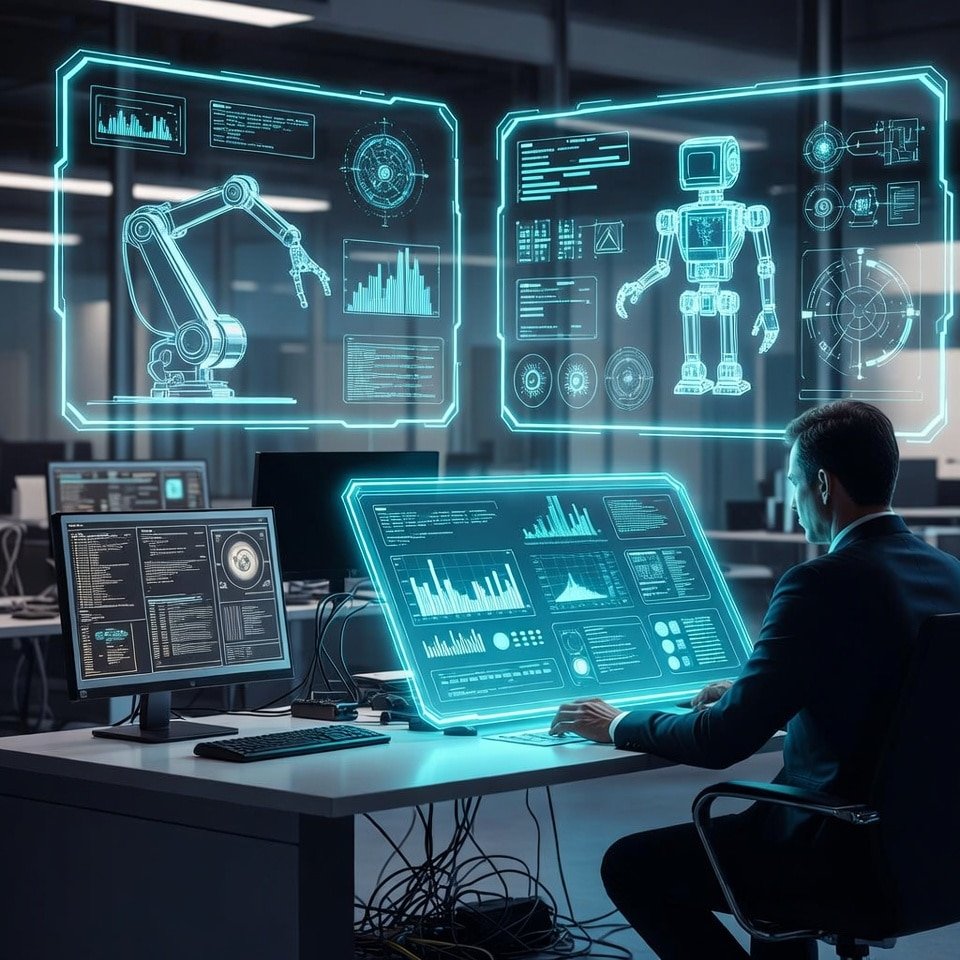
📌 Why this Topic Matters
In 2025, the rapid acceleration of AI is not just a hype in the tech industry, but it’s changing the concept of workplaces, workflows, and even work itself throughout the world. And as the most recent forecasts show:
- World Economic Forum estimates that while 92 million jobs may be lost globally by the year 2030, 170 million new jobs will be added, causing a net gain of 78 million jobs. All About AI+1
- While this is in process, many analysts believe that “40-50% of repetitive or routine work tasks” could be automated or augmented with the help of AI and workflow automation tools by the end of the decade. Blockchain Council+1
That means in 2027-just two years hence-millions of office workers, freelancers, small business owners, and even students may find half of their daily tasks handled by AI. The objective of this article is to explore which AI tools are driving this shift, what kinds of tasks they’re automating, and how you can stay ahead.
🔧 What “50% of Daily Work Tasks” Means — And Which Tasks Are Included
✅ Tasks Most Vulnerable to Automation
Areas where AI and automation mostly concentrate are:
Repetitive, Routine, Rule-based tasks – for example, data entry, scheduling, and report
- Many patterns and predictable tasks, for example, billing, bookkeeping
- Handling a lot of data, analytics-ready for data, market research, summarizing
Studies, including ones from McKinsey & Company, suggest that in a whole range of tasks, 30% of activities would be automated using already-existing technology, even if it means it will not automate an entire job.
Where office administration, data entry, customer service, and accounting are involved, a much higher percentage of tasks are at risk
.📈 Broader Workforce Impact
- According to a forecast, by 2027, it’s likely that nearly a quarter, i.e., around 23%, of all jobs would see a transformation due to AI automation.
- Often, companies are already using AI to speed up a process or automate a function, from hiring and HR to marketing, customer support, data analysis, and beyond.
So, “50% of daily tasks” as a goal may not involve a total loss of employment but a completely different approach to performing day-to-day tasks. This shall be a mix for many, where some tasks will be performed by AI, while others are done by humans.
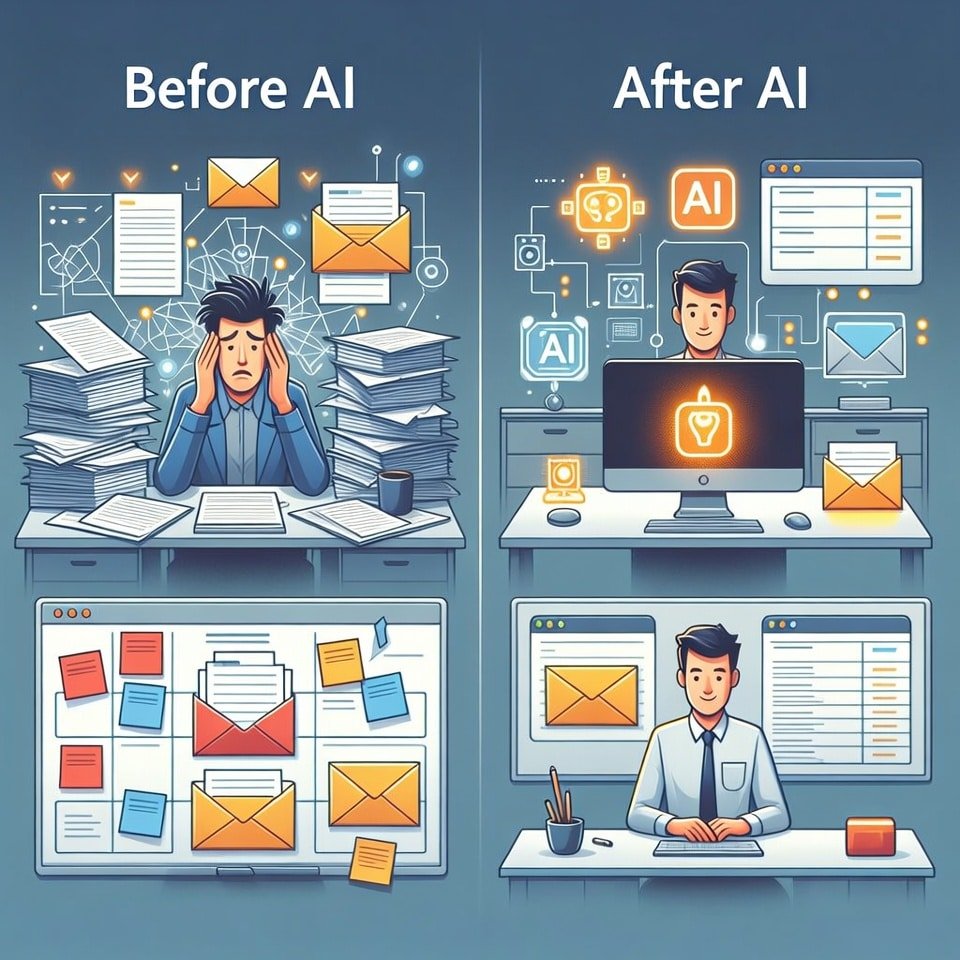
🧰 8 AI Tools & Categories That Will Replace 50% of Daily Work Tasks by 2027
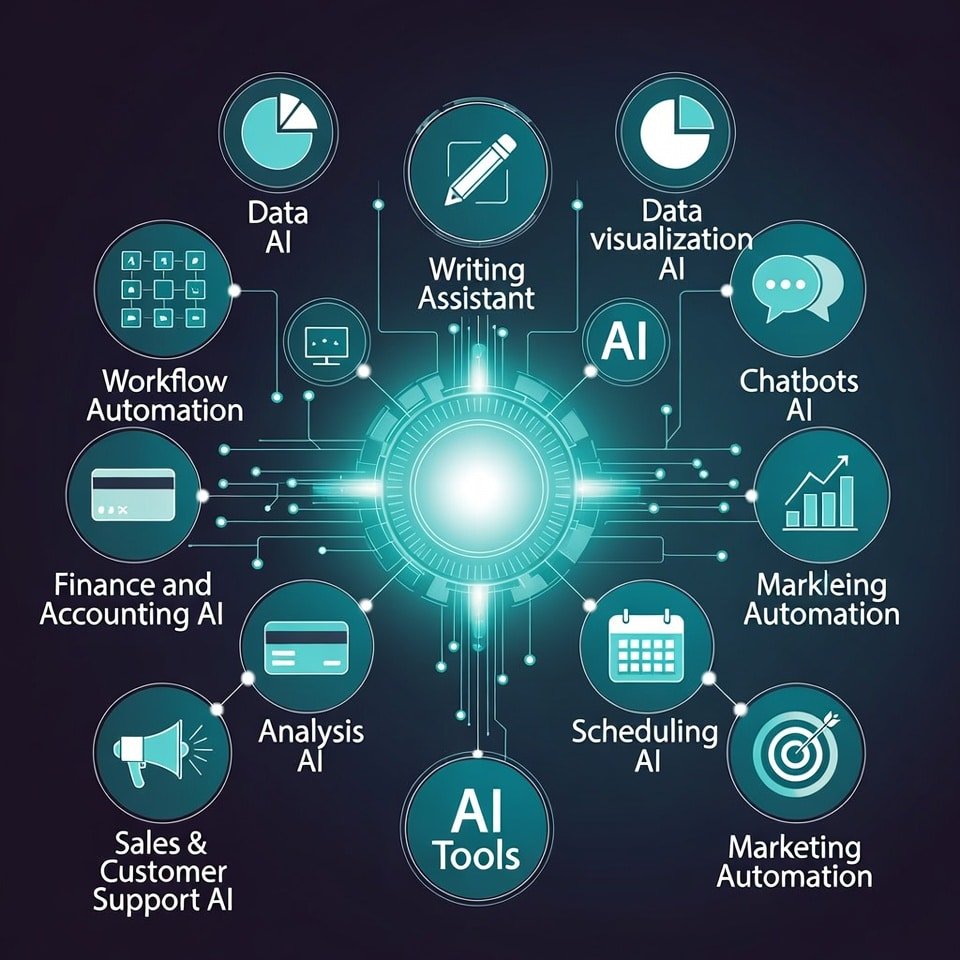
Here are eight types of AI tools — many already widely used — that are driving the wave.
1. AI Writing & Content Creation Assistants
With the help of large language models and AI-powered writing assistants, what used to take hours to complete, such as writing emails, writing reports, writing content, summarizing documents, writing proposals, among others, can now be accomplished in a matter of minutes.
These tools support:
- Develop first-pass content: blog posts, summaries, outreach emails
- Come up with original ideas, sketches, and designs, cutting down on brainstorming time
- Proof, edit, and even optimize text for tone, size, and/or clarity
These processes are already consuming 25 to 40% of their daylong repetitive writing tasks for many professionals like marketers, content writers, and small businessmen, and now all such tasks are being performed by AI.
2. Workflow Automation & Integration Platforms
Apps that tie various services/applications together (for example, CRM, email, spreadsheets, scheduling, and project management) for automation of common workflows such as lead intake, email follow-ups, notifications, syncing, and many others.
These cut down “busy work” significantly: manual copying, data entry, repeat admin tasks. Over a period, these automation tasks would, by themselves, take care of 20 to 30% of admin tasks. This also aligns with estimates about how office and administrative tasks are among the most automatable industries.
3. AI-based Data Analysis & Reporting Tools
Right from data cleaning to trend analysis, dashboard, forecasting, to report generation, AI analytics tools are proficient in doing all the mundane work that comes along with data-driven tasks.
A great benefit of AI analytics for small businesses, startups, and freelancers, for instance, would be that it would result in fewer hours being spent on analyzing figures, entailing yet another 15-25% of tasks being automated.
4. Customer Service Automation (Chatbots & Virtual Assistants)
AI-based chat robots, customer support agents, and automated help desk solutions are able to undertake a lot of customer inquiries, troubleshooting, FAQs, and support that were being done by human customer support agents.
Recent adoption trends reveal that a lot of disruption in AI has been in customer support and related services, which are being easily substituted for 40-70% of manual services.
5. Scheduling & Administrative Task Automation
Calendar management, meeting scheduling, reminder notifications, follows-ups, appointments, billing, and all those other tasks that are bite-sized but repetitive. AI technology has been able to eliminate most of those for individuals and companies. That is a straight cut in “daily work of frictions,” which can result in a 10% to 15% savings of workhours every week.
6. Bookkeeping, Invoicing & Finance Admin Automation
In the cases of small businesses and freelancers, finance administration, such as billing, payments, expense management, bookkeeping, can be mundane and even frustrating. Such tasks are now automated, like bookkeeping, classification, reconciliations, and reminders, by AI automation software.
Therefore, this category itself would be sufficient in cutting down a substantial portion (“10-20%”) of “back-office workload.”
7. Marketing & Social Media Automation Tools
Ranging from content idea generation to writing blog posts, creation of basic graphics, posting, to analytics, a lot of tasks in marketing that were either done manually or outsourced are being taken over by AI-driven marketing tools. This means small businesses, in particular, were doing this manual, and rather mundane, work.
These tools would help cut down manual marketing work by 30% to 50% of effort, particularly for small teams.
8. Personal Productivity & Task-Management Assistants
Some of these AI-related tools are focused on personal productivity tasks, including: personal to-do list management, personal reminder notifications for deadlines, summations of long documents/emails, identification of important tasks, setting of priorities. This would then imply that for solo, teleworker, or small-team individuals, there would be fewer lost hours in tasks that involve “switching contexts” and small tasks.
Taken together, these eight types of work encompass a large part of “everyday work.” With growing adoption, it appears that a reasonable estimate would be that 50% of a typical knowledge worker’s tasks could be accomplished through AI systems by 2027.
⚠️ Limitations & What Won’t (Probably) Be Replaced (Yet)
AI automation does not now, and probably will not in the near future, automate all tasks. There are types of work that are difficult, for example:
- Human-intensive tasks involving empathy, complex judgment, presence, etc. (teaching, nursing, idea brainstorming, negotiation, relationship-building).
- Recent analyses suggest that, despite the potential for automation, no job is now completely automatable.2 +1
- Advanced tasks requiring creativity, decision-making, management, and strategic tasks, where human context, human values, and human intelligence are involved.
- Roles requiring hands-on physical presence or manual work (Hardware installation, Real-world services, Physical logistics, Crafts).
That means that AI technology is affecting tasks within a job, but not necessarily obliterating a job. More often than not, many of these types of jobs are going to change, rather than vanish.
✅ What This Means for Professionals, Small Businesses & Freelancers
If you think AI will simply take over and make humans redundant, then you are right – but only partly. This is how Matt Hussey sums it all up for those who are waiting for a definition. What this means for you, he adds, is that.
- Increased Productivity & Efficiency: Routine, repetitive tasks are performed by AI, allowing humans to focus on more important, high-level tasks.
- Skills Demand Paradigm Shift: The business community will consider critical thinking, creativity, empathy, strategic thinking, and human-centric skills as important. This means that mundane tasks are automated, but human discernment becomes key.
- Reduced Barriers to Entry for Small Businesses: Small teams or individuals can use AI technology to effectively compete with bigger businesses, as work like administration, marketing, accounting, etc., becomes feasible.
- Need for Continuous Learning & Upskilling: Since AI takes care of the mundane tasks, it is a necessity for humans to learn how to leverage AI effectively.
- New Job Types & Opportunities: While there would be tasks like management of AI tools, AI-enhanced jobs, working in a hybrid human-AI model, and so on, this would lead to new types of jobs being available. In other words, many experts are of the opinion that despite automation, new jobs will also be created.
🔮 What 2027 (and Beyond) Might Look Like — A Future by Example
Suppose a normal working day in 2027 for a small business owner or a freelancer:
- Morning: Already, AI assistant has a set list of emails to send out every day, a list of urgent tasks
- While you take care of strategic tasks, an automated pipeline of AI takes care of data entry, bookkeeping, creating invoices, updating your CRM, and scheduling posts on social media.
- Noon: Analytics tool using AI creates insights from sales data and/or social media data to plan your campaign, which you then review.
- Customer inquiries from clients/website are attended to by AI chatbots; only complicated follow-ups are received by you.
- End of day: Review what you accomplished with AI, make adjustments as needed, and concentrate on your creativity and human involvement in tasks like strategy, innovation, and relationship-building.
This workflow, in a span of a certain period of time, replaces dozens of tasks that used to consume a lot of hours, which, in essence, automates a total of 30-60% of a daily
🧑💡 What You Should Do Right Now to Prepare & Benefit
If you want to ride this change rather than being swept by it, you must pay particular heed to your own values.
- Come back to using AI technology starting today, look into writing assistants, workflow automation, CRM Bots, Marketing Automation, bookkeeping software.
- Emphasize those skills which are difficult for an AI to imitate: creativity, complex problem-solving, emotional intelligence, decision-making, empathy, client relations.
- Consider yourself a “manager of AI” – you have a role in prompting, directing, and even curating AI’s output.
- For businesses: Start with automation of repeated tasks – that will get you time savings, cost savings, and efficiency increase.
- Stay updated & keep learning — AI is emerging quickly. Technologies that are not in use now might be leaders in 2026-2027.
📊 Quick Summary Table: AI Automation Impact by 2027
| Area / Task Type | Likely AI Impact by 2027 | What Humans Should Focus On |
| Admin jobs which require repetition, entry of data, bookkeeping, and scheduling. | High: 50–70% tasks automated or AI-assisted | Oversight, decision-making, client interaction |
| Writing content, marketing, basic design, and creating social media posts. | Medium-High: 40–60% automation / AI assistance | Strategy, creativity, brand voice, storytelling |
| Customer support-phone for general queries | Medium-High: 40–60% automation / AI assistance | Complex queries, empathy-based service, trust-building |
| Data analysis & reporting | Medium: AI does data processing and identifies trends. | Insight interpretation, business decisions, strategic planning |
| High-level strategy, creation, leadership | Low-difficult to fully automate | Human judgment, vision, relationship-building, innovation |
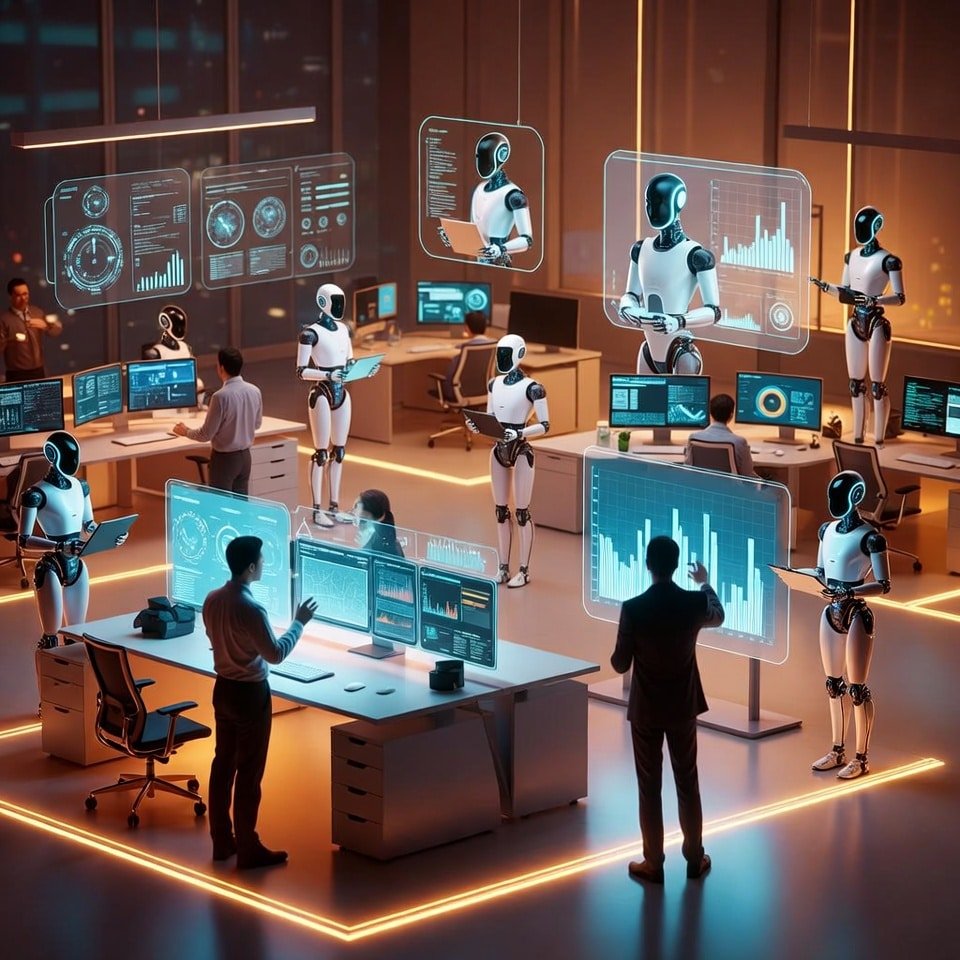
🎯 Final Thoughts: The Future is Hybrid — Humans + AI
For many of us, “Work” in 2027 will be nothing like work today: not a grind through a pile of repetitive tasks because so much of that busywork will be taken care of by AI. That doesn’t automatically equate to unemployment but does equate to transformation.
AI tools will replace-or at least significantly reduce-around half of daily work tasks for many modern workers, in particular those working office, clerical, creative, marketing, and admin-heavy roles. But humans remain vital-for what machines can’t do: creativity, empathy, complex thinking, trust, leadership.
If you adapt proactively, embracing AI tools while sharpening your uniquely human skills, the next few years could unlock more productivity, freedom, and potential than ever before.